An interior design style is a shared vocabulary: a recognizable set of forms, materials, colours, and rules that make a room read a certain way. Learn the vocabulary and you can name what you like, shop for it, and brief a designer without hand-waving.
Here’s the cheat sheet. Japandi is calm craft, mid-century modern is 1950s optimism, transitional is classic-made-clean, organic modern is minimalism gone soft, Japanese is space as a material, rustic is rough and honest, industrial is the building showing its work, bohemian is layered and collected, eclectic is a deliberate mix, art deco is glamour with geometry, and contemporary is whatever’s current. The rest of this guide unpacks each one, then tells you how to actually choose. For the city-specific version, our design coverage goes deeper.
Modern vs contemporary: the mix-up everyone makes
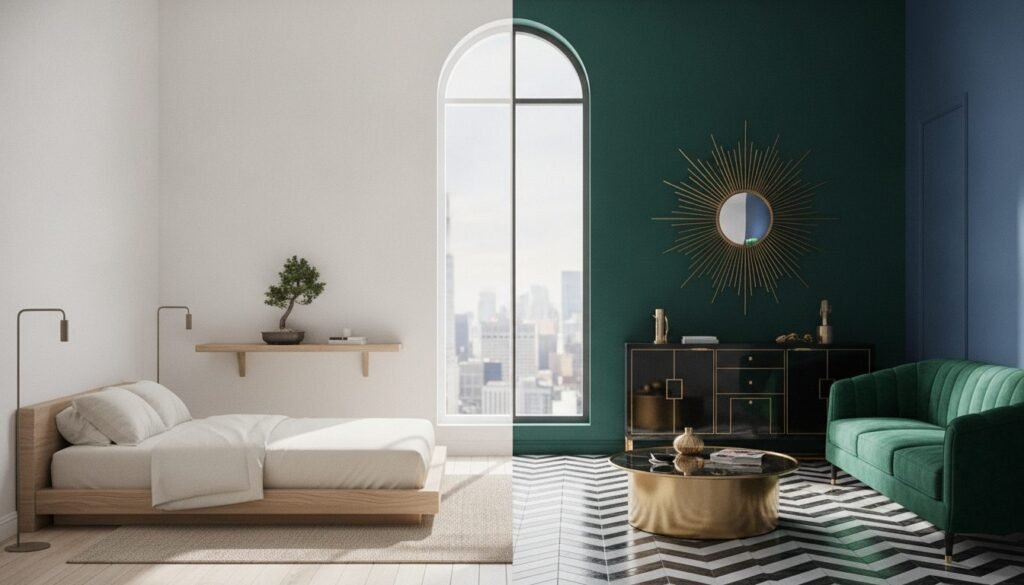
They’re not synonyms. Modern is a fixed historical movement from the early to mid 20th century, rooted in the Bauhaus: clean lines, function first, ornament stripped away. Contemporary just means “of the present,” so it evolves constantly. Modern in 2026 looks exactly like modern in 1956. Contemporary in 2026 looks nothing like contemporary in 1996.
A useful test: if a room could be dated to a specific era, it’s probably modern (or one of its descendants). If it reflects what designers are doing right now, it’s contemporary interior design by definition. Keep that distinction in mind, because half the styles below are modern’s children.
Japandi interior design
Japandi is the meeting of Japanese wabi-sabi, the appreciation of imperfection, and Scandinavian hygge and functionalism. The portmanteau dates to the 2010s, and the hybrid works because both traditions already agreed on the essentials: light woods, low-slung furniture, muted neutrals, and visible craft instead of applied ornament. The result is the calmest style on this list, restrained without feeling cold.
- Light woods, left natural
- Low-profile furniture
- Muted, neutral palette
- Craft over ornament: texture does the decorating
For Toronto, japandi is the condo whisperer: low furniture and quiet colour make a 550-square-foot floor plan feel twice its size.
Mid-century modern interior design
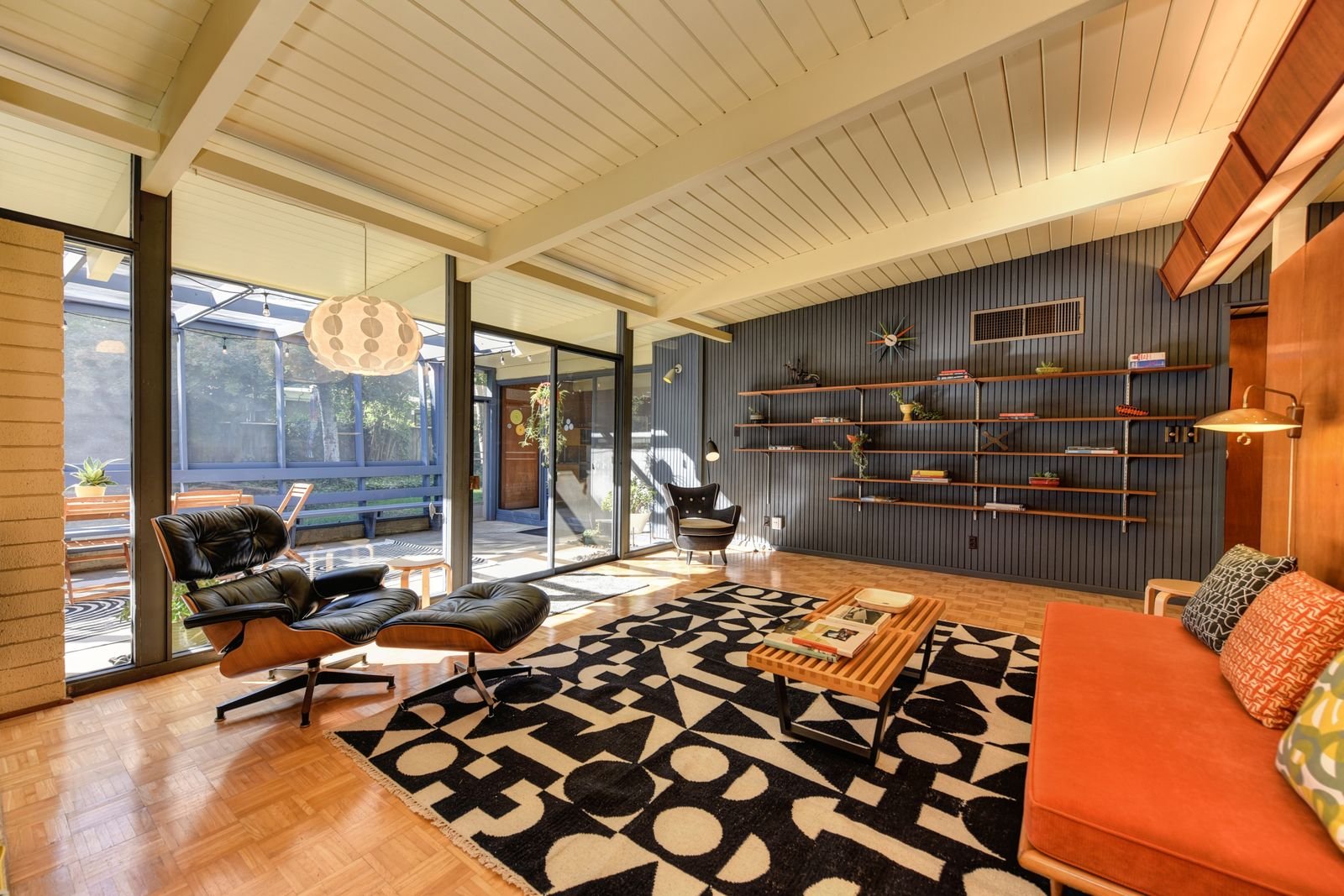
Mid-century modern covers roughly 1945 to 1969: the era of Eames and Saarinen, clean lines, tapered legs, teak and walnut, and organic curves that softened modernism’s rigour. The funny part is the name came later. The term was popularized by Cara Greenberg’s 1984 book, which means the style was retro before most of us knew what to call it.
- Clean lines and tapered legs
- Teak and walnut
- Organic curves
- Designer pedigree (Eames, Saarinen)
It suits Toronto’s postwar bungalows and brick semis, where the architecture and the furniture are finally the same age.
Transitional interior design
Transitional is the diplomatic style: traditional silhouettes simplified with clean lines and neutral palettes. You keep the comfort and familiarity of classic furniture, but the carving, fringe, and heavy pattern get edited out. It’s the answer when one person in a household wants warmth and the other wants modern, which is most households. Done well, it reads as timeless rather than indecisive.
- Traditional silhouettes, simplified
- Clean lines
- Neutral palettes
- Balance over statement
It’s the natural fit for a renovated Victorian or Edwardian semi, where modern interiors have to negotiate with century-old bones.
Organic modern interior design
Organic modern starts from a minimalist base and warms it up with natural materials: curved sculptural forms, plaster finishes, and raw wood. Think of it as minimalism that stopped being strict. The lines stay quiet and the palette stays calm, but everything you touch has texture and everything you see has a curve. It’s currently the default language of high-end calm.
- Minimalist foundation
- Curved, sculptural forms
- Plaster finishes
- Raw wood and natural materials
In Toronto it’s the best antidote to a glassy new-build condo, adding warmth without adding clutter.
Japanese interior design
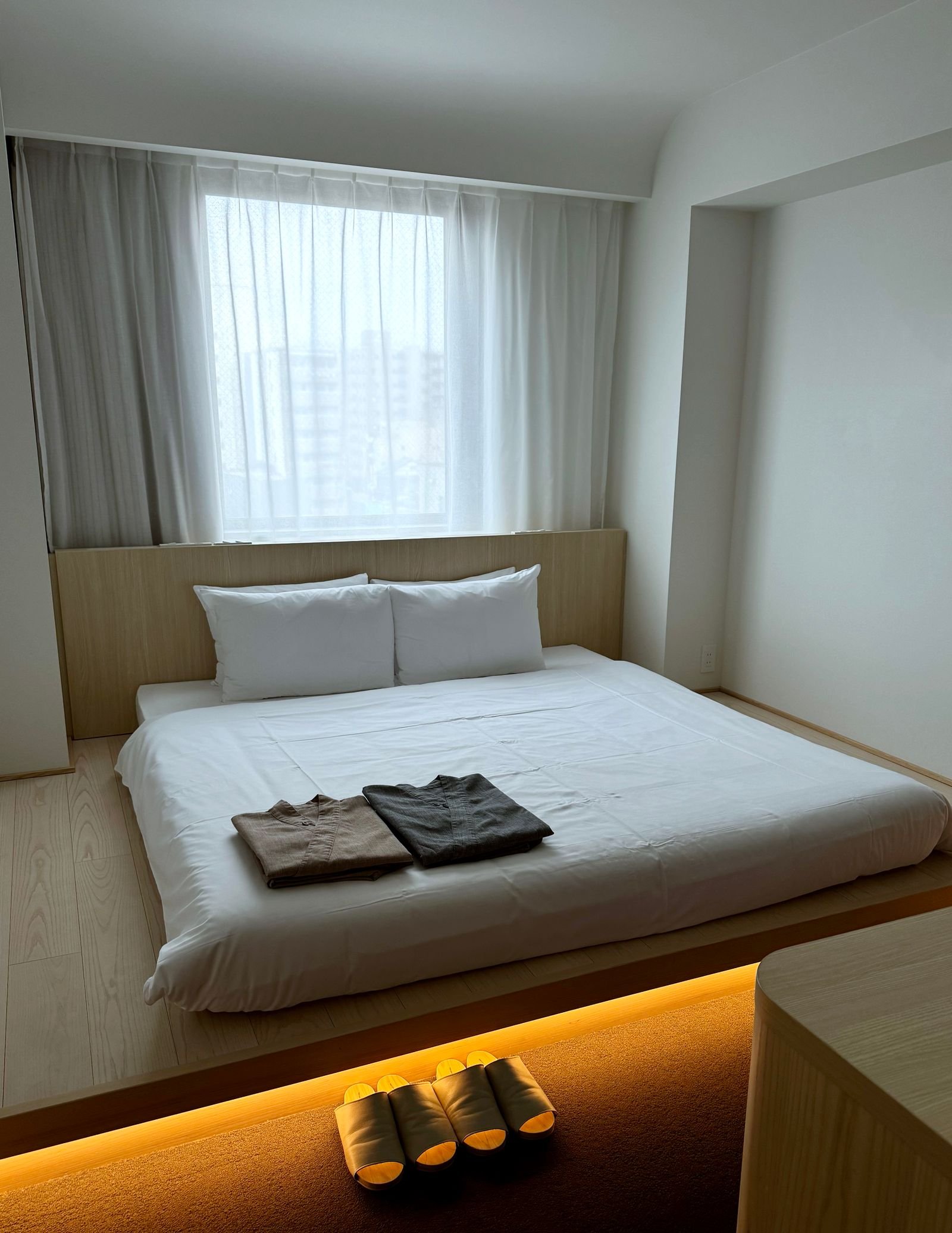
Japanese interior design treats empty space as a material. The organizing idea is ma, or negative space: rooms breathe instead of fill. Natural wood, shoji screens, tatami mats, and low furniture keep everything close to the floor and close to nature, while wabi-sabi welcomes age and imperfection rather than hiding it. It’s the source code that japandi later remixed.
- Ma: negative space as a design element
- Natural wood
- Shoji screens and tatami
- Low furniture
- Wabi-sabi imperfection
You don’t need tatami in a Toronto apartment to apply the lesson: leave room empty on purpose, especially in a small one.
Rustic interior design
Rustic is the most honest style here: rough-hewn timber, stone, handcrafted objects, and weathered finishes that show their history instead of hiding it. Nothing is polished to perfection, and that’s the point. Where minimalism removes evidence of the human hand, rustic puts it front and centre. The risk is theme-park cabin; the fix is restraint and real materials.
- Rough-hewn timber
- Stone
- Handcrafted pieces
- Weathered, lived-in finishes
In a Toronto house it works best as an accent, a single timber or stone gesture, rather than a full cottage transplant.
Industrial interior design
Industrial design exposes what other styles cover up: brick, ductwork, steel, and concrete left visible and unapologetic. It grew out of the 1960s and 70s, when artists converted SoHo warehouses in New York into live-work lofts and decided the factory finishes were the feature. Five decades later, “exposed brick” is still the two most persuasive words in real estate listings.
- Exposed brick
- Visible ductwork
- Steel and concrete
- Warehouse-scale openness
Toronto’s own warehouse conversions wear it natively; in a standard condo, hint at it with steel and concrete rather than faking the brick.
Bohemian interior design
Bohemian style is layered, collected, and deliberately unfinished: global textiles stacked on each other, plants everywhere, and vintage pieces that arrive with stories attached. The name comes from the 19th-century Parisian artist counterculture, and the spirit survives intact. There are no rules about matching, only an instinct for abundance. It’s the one style on this list you build over years, not in one shopping trip.
- Layered global textiles
- Plants, in quantity
- Vintage and second-hand finds
- Free-form accumulation
It’s the most rental-friendly style in Toronto, because it’s built from layers you can take with you, not renovations you can’t.
Eclectic interior design
Eclectic is often confused with bohemian, but the difference is discipline. Eclectic design is a deliberate mix of eras and styles unified by something consistent: a repeated colour, a controlled sense of scale, a recurring shape. Boho is free-form accumulation; eclectic is curation. A good eclectic room looks effortless precisely because someone made a hundred careful decisions to get there.
- Deliberate mix of eras
- Unifying colour thread
- Consistent scale
- Repetition as glue
For Torontonians who inherit furniture, thrift on weekends, and still buy new, eclectic is less a style choice than a survival skill.
Art deco interior design
Art deco is glamour expressed as geometry: sunburst motifs, stepped forms, lacquer, brass, and exotic veneers. It takes its name from the 1925 Paris Exposition, though “art deco” as shorthand was only popularized in the 1960s, largely through Bevis Hillier’s 1968 book. And it’s having a moment again: in House & Home’s H&H 100 designer poll, more than half the panel named an Art Deco revival, with bold geometry, lacquer, brass, and rich woods, among 2026’s defining directions. We unpack that shift in our 2026 interior design trends report.
- Sunbursts and stepped forms
- Lacquer finishes
- Brass
- Exotic veneers and rich woods
In a Toronto home, deco lands best as a single confident gesture, one lacquered or brass-detailed piece in an otherwise quiet room.
How to pick a style (without picking just one)
Don’t match; mix. The rooms that age worst are the ones bought as a set from a single showroom in a single style. The rooms that age best take one style as a base, usually the one the architecture already suggests, and borrow one or two gestures from another.
Which brings up the part most guides skip: your light and your architecture decide more than your taste does. A north-facing condo will fight a dark rustic palette all winter. A loft with exposed brick has already voted industrial, so work with it. Start from what the building gives you, then layer in the style you love at the scale of furniture, textiles, and objects.
And give yourself time. Bohemian and eclectic rooms prove the point: the best interiors are accumulated, not ordered. Browse our design section for the Toronto-specific version, from where to shop each look to what local designers are actually doing.
Frequently asked questions
What are the main interior design styles?
The 11 most-searched interior design styles are japandi, mid-century modern, contemporary, transitional, organic modern, Japanese, rustic, industrial, bohemian, eclectic, and art deco. Each is defined by a consistent set of materials, forms, and colours, and most rooms work best mixing two rather than committing to one.
What is japandi?
Japandi is a 2010s portmanteau blending Japanese wabi-sabi with Scandinavian hygge and functionalism. Its signatures are light woods, low-profile furniture, muted neutrals, and craft over ornament. The two traditions share a respect for simplicity and imperfection, which is why the hybrid feels natural rather than forced.
What is the difference between modern and contemporary design?
Modern is a fixed historical movement from the early to mid 20th century, rooted in the Bauhaus, so its look never changes. Contemporary means “of the present” and evolves continuously. A modern room can be dated to its era; a contemporary room reflects whatever designers are doing right now.
What interior design style is trending in 2026?
Art deco is the headline revival of 2026. In House & Home’s H&H 100 designer poll, more than half the panel pointed to a return of deco’s bold geometry, lacquer, brass, and rich woods. See our full 2026 trends report for the rest of the year’s directions.