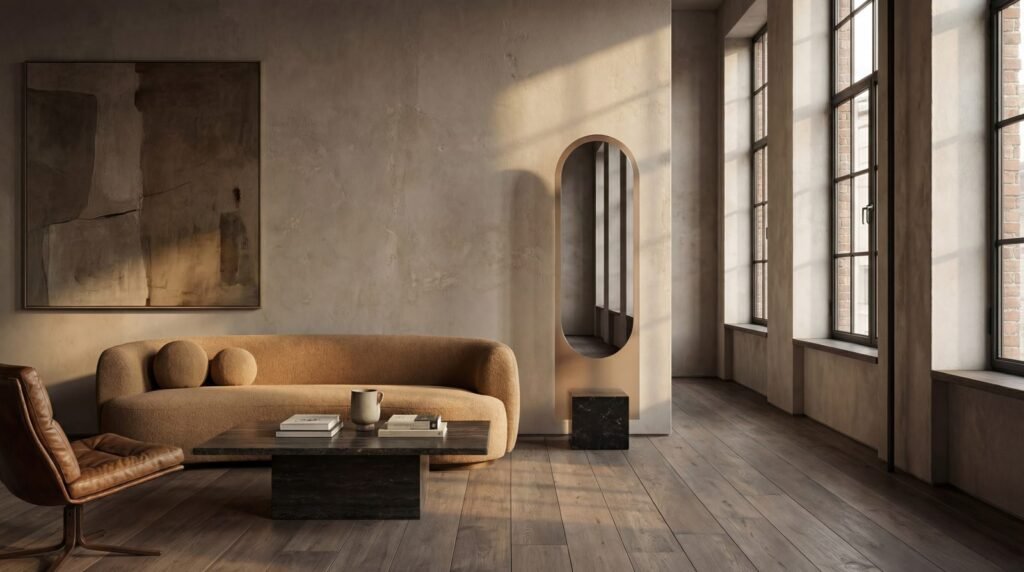
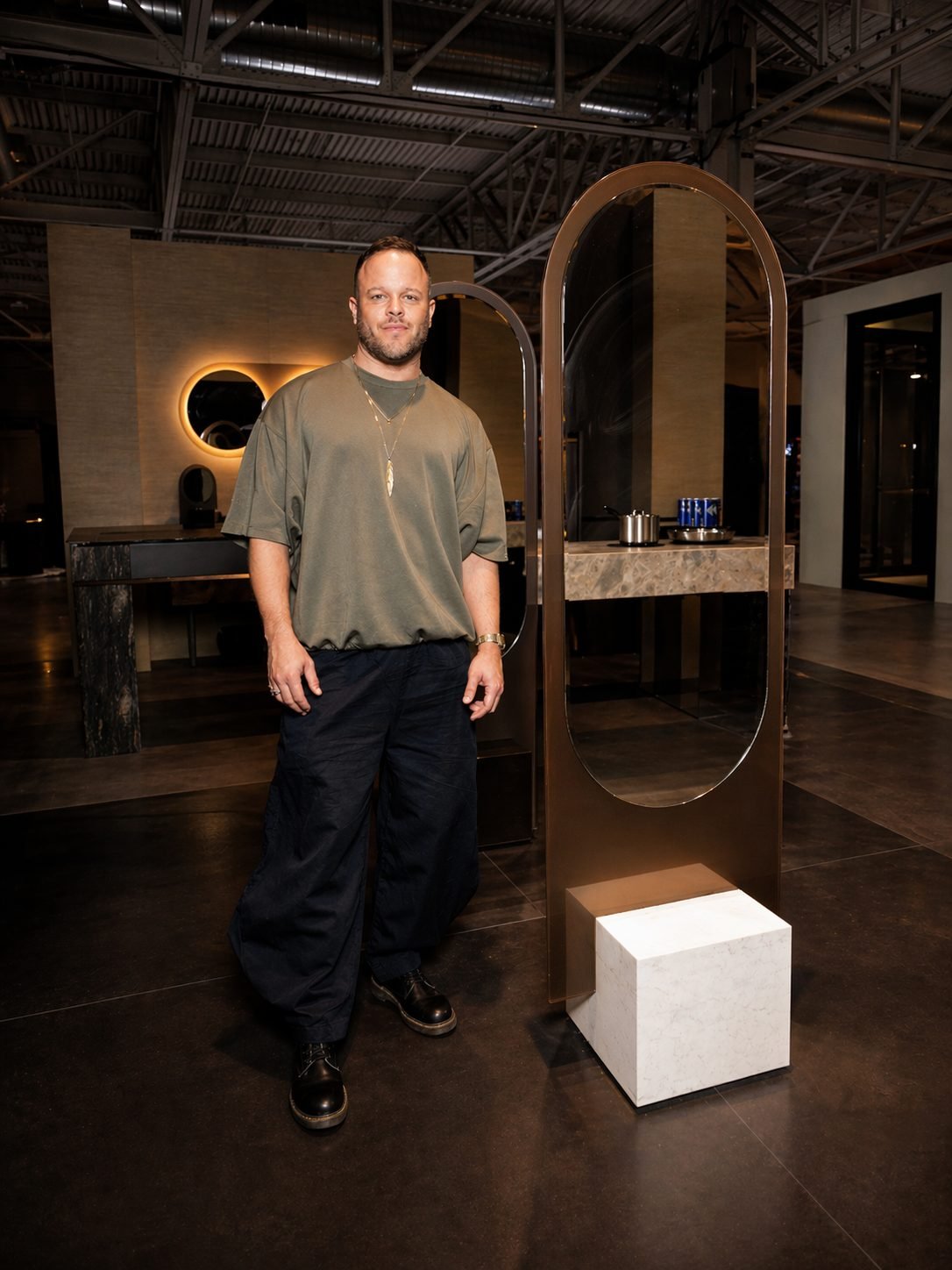
A Toronto design studio does not usually turn up in the middle of a global conversation about architectural surfaces. That is what makes the story of Claris Company worth telling. From a workshop at 50 Carroll Street, founder Eugene Ishchak and Creative Director Benoit Gerard built a collaboration with Cosentino, the Spanish surfaces brand, that moved through this city before it became a full collection. The concept was shown at Cosentino City Toronto, refined in the room, and then grew into an object that now carries a Cosentino mineral surface at its base. It is a small case study in how ideas travel, and how a Toronto design studio can help shape a design language that reaches well past the 416.
A Toronto studio, a global brand, and a room in this city
The partnership did not start with a brief. According to Cosentino’s own account of the project, Ishchak first met Gerard at C·NEXT, the brand’s design event, and the dialogue continued at Cosentino City Toronto. That is where the two introduced “Twins,” an earlier mirror concept. Twins established the creative language that later became the Gemini Collection, the nine-piece line Gerard now designs for Claris. Toronto was not a backdrop here. It was the room where the idea was tested and where the conversation with a global manufacturer actually happened.
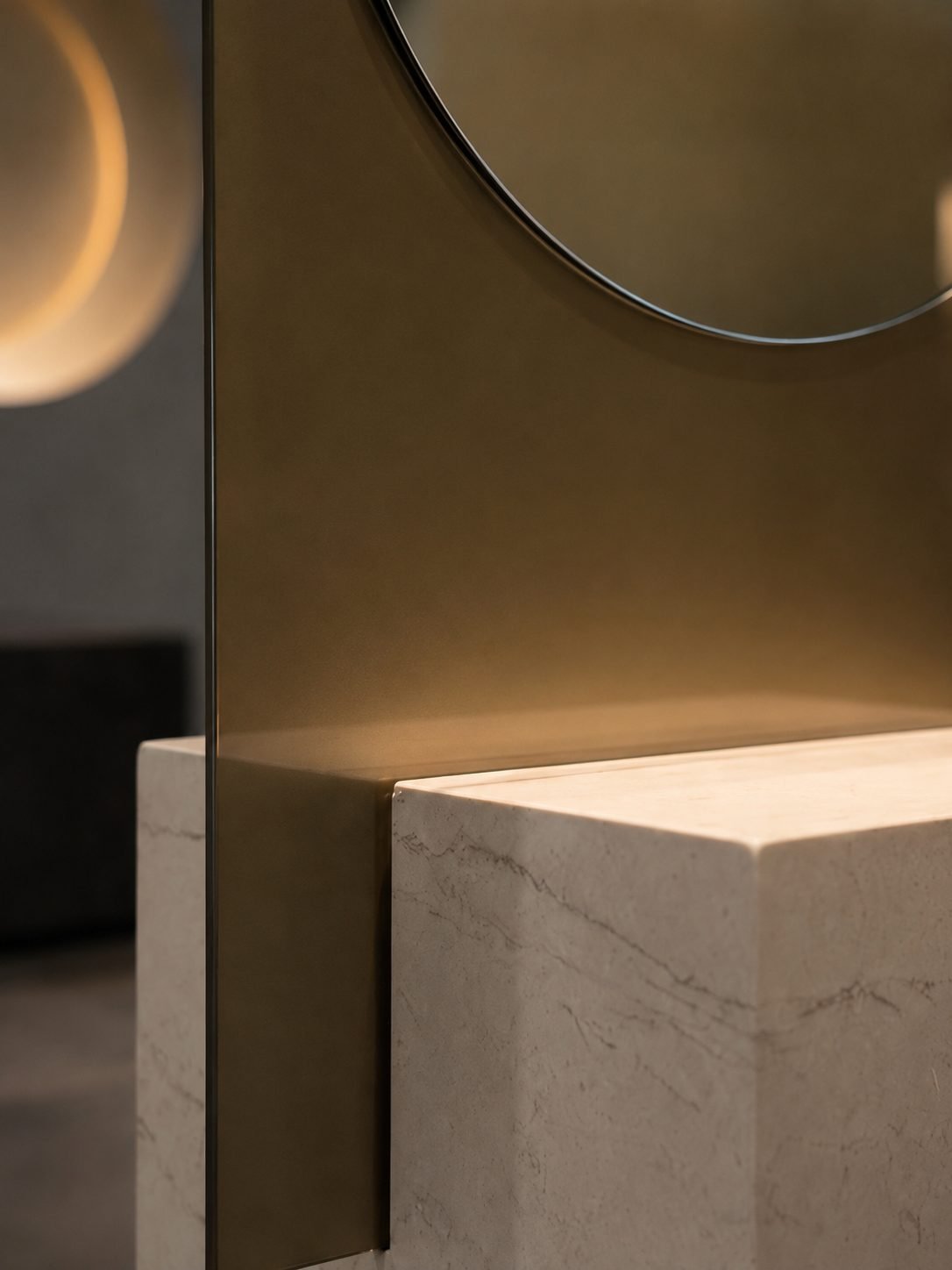
Returning to C·NEXT in 2026, the pair encountered ĒCLOS, a Cosentino material that would change what the mirror could be. Per Cosentino, ĒCLOS is a full-body mineral surface with continuous veining, developed for architecture. The important part, and the reason it mattered to a mirror designer, is that it shows the same character across every edge and profile. It can be shaped and exposed from any angle without giving away a seam or a printed face. For a studio thinking about a mirror as a freestanding object rather than a wall fixture, that property opened a door.

From surface to object
The result is Alice, a freestanding floor sculpture that combines bronze-frosted Belgian glass with an ĒCLOS base. Cosentino describes the piece as one that changes as light, movement and perspective shift, which is a polite way of saying it does not sit still. Walk past it and the frosted glass reads differently against the stone. The base is not a stand holding up a mirror. It is a structural part of the composition, given equal weight to the glass it supports.
That balance is the whole point, and Gerard says as much in the Cosentino article.
The idea was never simply to create another mirror. It was to create an object where every material contributes equally to the overall composition.
There is a smaller sibling, too. Alice Mini takes the same pairing down to tabletop scale, sized for countertops, shelving and vanities. Both versions come in two ĒCLOS finishes: Ivora, a warm off-white matte, and Phantome, a deep matte black, also matte. The choice reads less like a colourway and more like a decision about how loud you want the object to be in a room.
What a Toronto design studio is doing in a surfaces story
It is worth being clear about what happened and what did not. Claris did not licence a logo or slap a brand name on a stock mirror. A Toronto design studio took an architectural material built for buildings and used it at the scale of a single object, then worked with the manufacturer to get there. That is a different kind of relationship than most product collaborations, and it is the reason the piece holds up as design rather than marketing. The material does real work. The glass does real work. Neither is decoration for the other.
This is also a familiar Toronto pattern once you start looking. The city’s design scene has always been better at making things than at announcing them, whether that is the studios tucked into the Castlefield Design District or designers like Ali Budd who build serious reputations before most people notice. Claris fits that mould. The work travelled to a European design event and back, and the loudest evidence is the object itself.
The collection behind the headline piece
Alice is the statement, but it is one of nine. The Gemini Collection is a set of mirrors by Benoit Gerard, each pairing a primary form with a circular aperture, all cut from 6mm bronze-frosted Belgian glass. The glass is crafted in Europe on Diamond ClearVision low-iron glass, certified to North American standards, and backed by a five-year warranty. The circular aperture is the through-line, a single design move repeated across shapes so the collection reads as a family rather than a grab bag.
The range is wide enough to matter. Alice sits at the top at $5,000, with Alice Mini at $750 as the entry point. In between: Gigi from $1,350, Alhena from $1,700, Twins from $1,800, Leda from $1,900, Jumeau from $2,000, Mercure from $2,400, and Vivo from $2,550. The spread tells you the studio is thinking about more than a single hero object. A collection with a $750 piece and a $5,000 piece is a collection built to live in real projects, not just in a photograph.

Why it reads as Toronto
The temptation with a story like this is to lead with the European material or the global brand. The more interesting fact is the address. A studio at 50 Carroll Street took a mirror, refused to treat it as a mirror, and pushed it into object territory with a manufacturer most people associate with countertops and facades. Toronto design has plenty of talent working quietly at that level. Claris belongs in that conversation.
What the Alice project shows is that a good idea does not need a bigger city to find its audience. It needs a material worth using, a point of view worth defending, and a room to test it in. This one had all three, and one of those rooms was here.