Luxury real estate in Toronto has no single price tag, and that is the first thing worth understanding. Sotheby’s International Realty Canada draws its line at $4M, with ultra-luxury starting at $10M; RE/MAX tracks the Greater Toronto luxury market at $3M and up. The 2025 picture was bifurcated: a softer mid-luxury band and a resilient, growing top tier. Engel & Völkers pegged Toronto’s ultra-luxury average near $14.8M by mid-year.
So the real story is less about a number and more about what that money buys: land, heritage streetscapes, and the design talent behind the walls. This is an editorial look at the city’s high-end homes, the enclaves that hold them, and the studios shaping them.
The neighbourhoods that define luxury real estate in Toronto
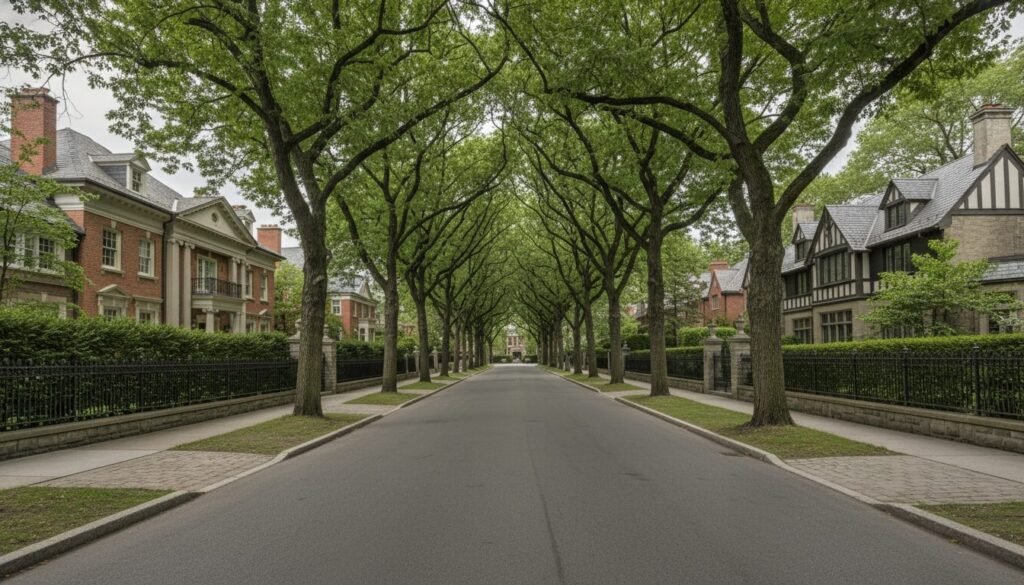
Geography does most of the heavy lifting here. Toronto’s luxury market concentrates in a handful of established enclaves, each with a distinct architectural signature that explains why the value sticks. Land, canopy, and heritage protection matter as much as square footage.
The Bridle Path, often called Millionaires’ Row, sits on lots of 2 to 4 acres, which is extraordinary inside a major city. The architecture is deliberately eclectic: Georgian, Tudor, Colonial, neo-traditional, and full modern estates share the same winding streets.
Rosedale is one of the city’s oldest suburbs, founded in the 1820s and named by Mary Jarvis for its wild roses. Its Victorian, Georgian, Tudor, and Edwardian mansions, built roughly 1860 to 1930, line ravine streets that still feel half-rural. The South Rosedale (2003) and North Rosedale (2005) Heritage Conservation Districts together form the largest HCD in Ontario, around 1,800 properties.
Forest Hill earned its canopy by rule. When the village incorporated in 1923, its building codes required every house to be architect-designed and a tree planted in the front yard. A century later, that single regulation is why the streets read the way they do.
Yorkville, a village from 1853 and a 1960s folk-and-bohemia hub, now anchors the Mink Mile along Bloor Street between Yonge and Avenue Road, one of North America’s most expensive retail stretches. Lawrence Park, assembled from 1907 as a planned garden suburb, runs to Tudor, Colonial, and English-cottage homes finished through the 1950s.
Out west, The Kingsway in Etobicoke was developed from the early 1900s by lawyer Robert Home Smith, who marketed it as “a bit of England far from England.” Its architect-designed Tudor and English homes went up between 1924 and 1947. Hoggs Hollow, named for miller James Hogg who settled there in 1824, sits in a Don River valley south of York Mills Road, with most of its homes arriving in a boom that ran from 1933 into the war years.
The design behind the homes
If neighbourhoods explain the value, designers explain the experience. Toronto’s most influential luxury design name is Yabu Pushelberg, founded in 1980 by George Yabu and Glenn Pushelberg and still based on Booth Street, with a New York studio alongside. Both founders are Officers of the Order of Canada, and their hospitality interiors have set a global standard for decades.
For a concrete sense of what the top of the market looks like inside, consider the Toronto penthouse by Reflect Architecture for producer Noah “40” Shebib, featured in Dezeen on 10 May 2025. The roughly 2,700-square-foot home runs a granite plinth around its perimeter and centres on a kitchen island built from three tin blocks. The standout pieces are a Bösendorfer grand piano finished by artist Takashi Murakami and a custom dining table by Sabine Marcelis. It is restraint plus a few extraordinary objects, which is the current grammar of luxury design.
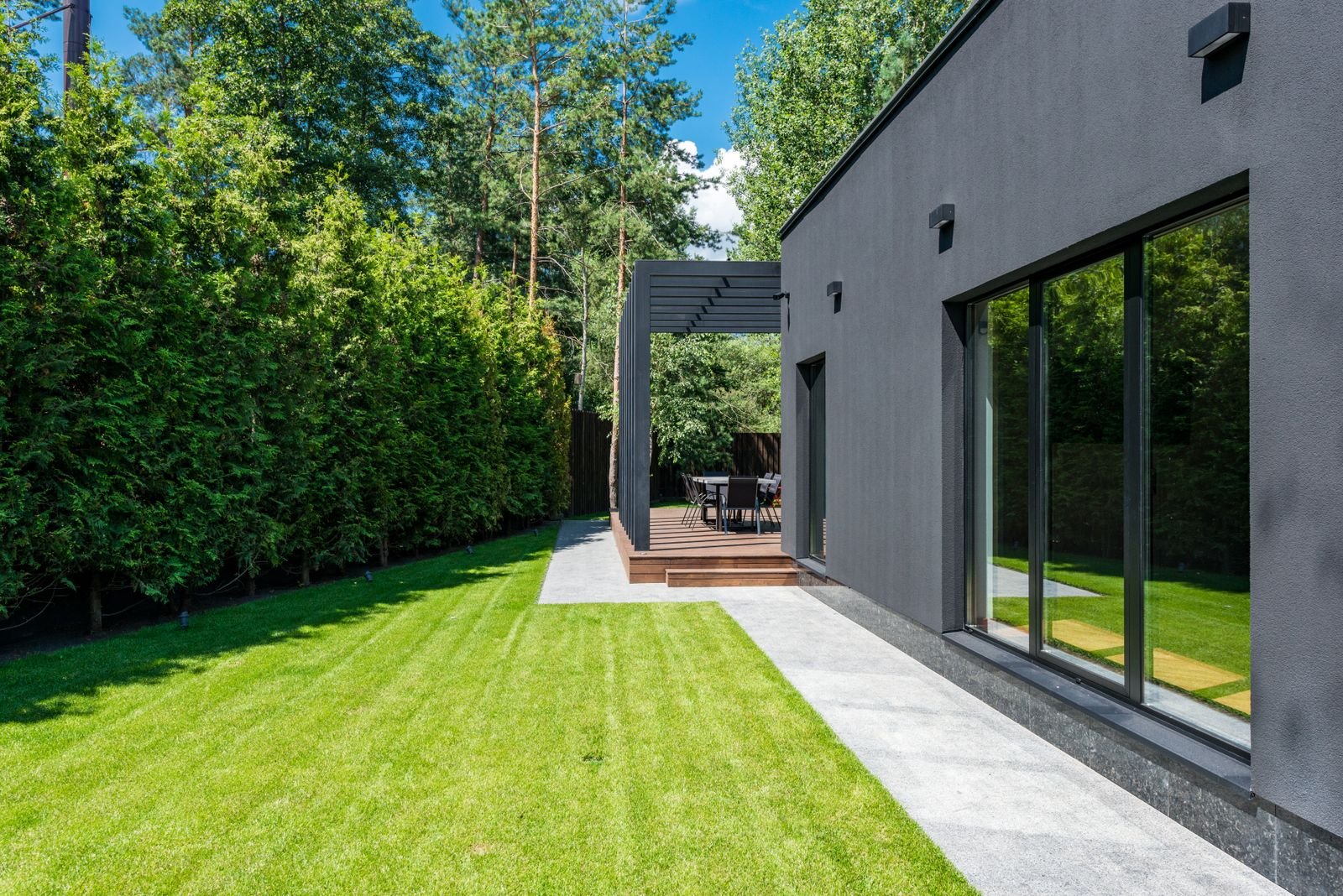
The supporting cast is deep. Studio Munge shapes the hospitality-scale interiors that bleed into high-end residential, Anne Hepfer Designs handles refined private homes, and StudioAC brings a cleaner, contemporary line to projects like Everden House. The common thread is craft over flash, and material over square footage.
Is the Toronto luxury market still strong, and where is it heading?
The market split in two through 2025, and that division is the clearest signal of direction. Sotheby’s reported Q1 2025 sales over $4M down 15% year over year, yet five properties traded above $10M in that quarter when none had a year earlier. Engel & Völkers found $10M-plus sales more than doubled in the first half of 2025 while the $1M to $4M band slowed against high inventory.
RE/MAX read a similar story: a strong late-2024 surge above the $3M mark, then a softer early 2025, with a balanced-to-buyer GTA market projected into 2026. Sotheby’s 2026 Luxury Outlook, published in January, noted that global luxury outperformed traditional real estate in 2025 and expects an upward trajectory ahead.
The pattern is consistent across firms: resilient ultra-luxury, a cooler mid-luxury, and a market where the rarest homes behave differently from everything below them. For readers, the design takeaway is simple. The properties that hold their position are the ones with irreplaceable land, protected streetscapes, and serious design behind them.
A note on scope: this is design-led editorial, not financial or investment advice. We cover the architecture, the interiors, and the context, and we leave the buy-or-sell calls to you and your advisors.
Frequently asked questions
What is considered luxury real estate in Toronto?
There is no universal figure, so the firm matters. Sotheby’s International Realty Canada defines luxury as $4M and up, with ultra-luxury at $10M-plus. RE/MAX Canada tracks Greater Toronto luxury from $3M. Engel & Völkers reported a Toronto ultra-luxury average near $14.8M by mid-2025.
Which Toronto neighbourhoods are the most expensive?
The established luxury enclaves include the Bridle Path, with its 2-to-4-acre lots, plus Rosedale, Forest Hill, Yorkville, Lawrence Park, Hoggs Hollow, and The Kingsway in Etobicoke. Each pairs scarce land or protected heritage streetscapes with distinct period architecture, which is a large part of why values hold.
Who designs Toronto’s luxury homes?
Yabu Pushelberg is the marquee Toronto name, founded in 1980 and globally known for hospitality interiors. Reflect Architecture designed Noah Shebib’s Toronto penthouse, featured in Dezeen in May 2025. Studio Munge, Anne Hepfer Designs, and StudioAC also work across the city’s high-end residential and hospitality projects.
Is Toronto luxury real estate a good investment?
We cover design and architecture, not investment strategy, so we will not make that call. The verified market context is that ultra-luxury ($10M-plus) stayed resilient and grew through 2025 while mid-luxury softened. Any purchase decision should run through a qualified real estate and financial advisor, not an editorial guide.