Toronto hosted six World Cup matches at BMO Field, renamed Toronto Stadium for the tournament, between 12 June and 2 July 2026, opening with Canada against Bosnia and Herzegovina. The free FIFA Fan Festival ran at Fort York and The Bentway from 11 June to 19 July. The football is finished. What it built is still standing, and that is what this guide is about.
The sports coverage is everywhere. What went mostly unexamined is that this was also the largest design event Toronto has hosted in years: a stadium rebuilt by a global architecture firm, a slate of commissioned public art, and at least one permanent piece of city infrastructure. That is the story here.
How do you add 17,000 seats to BMO Field?
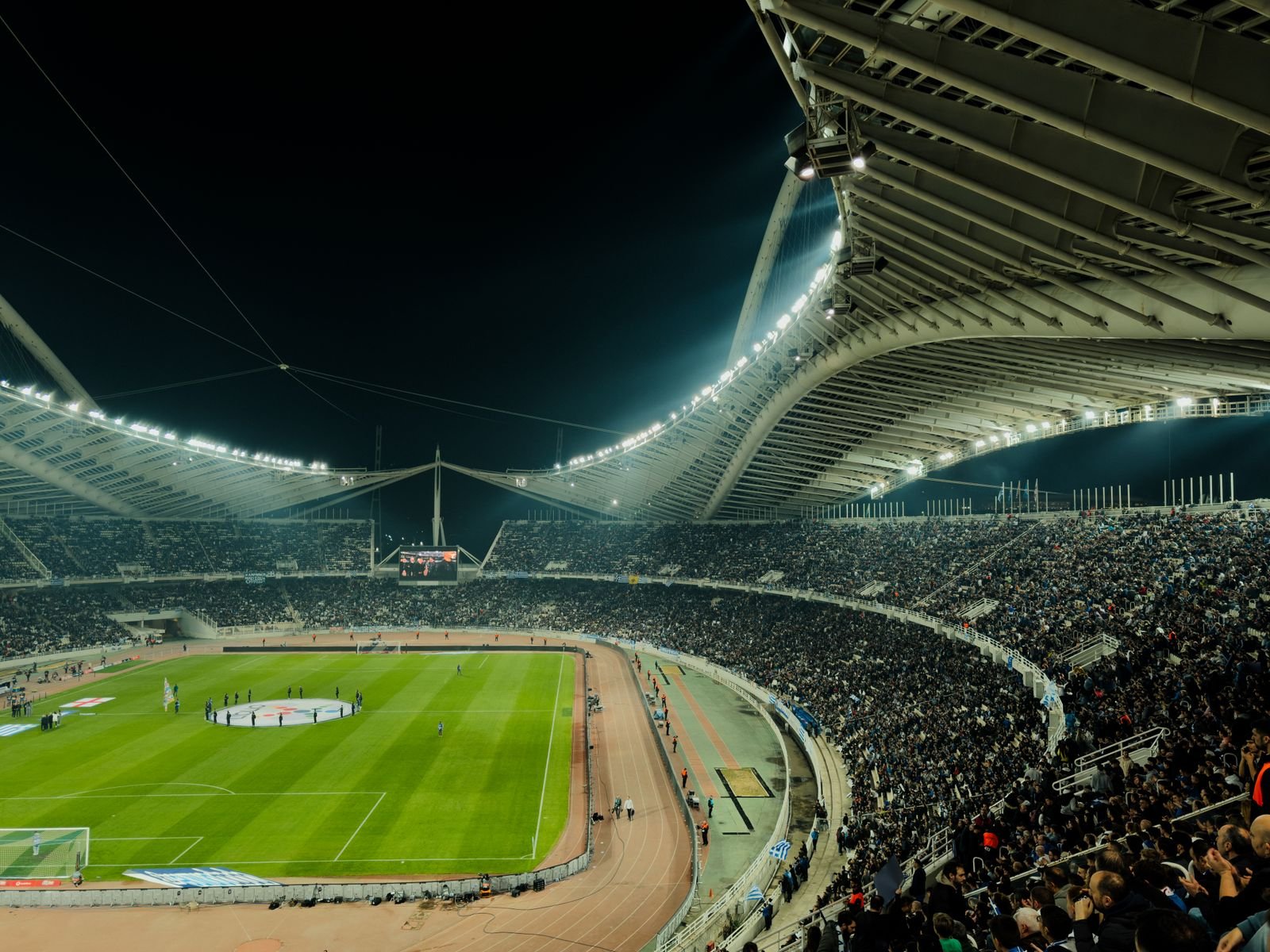
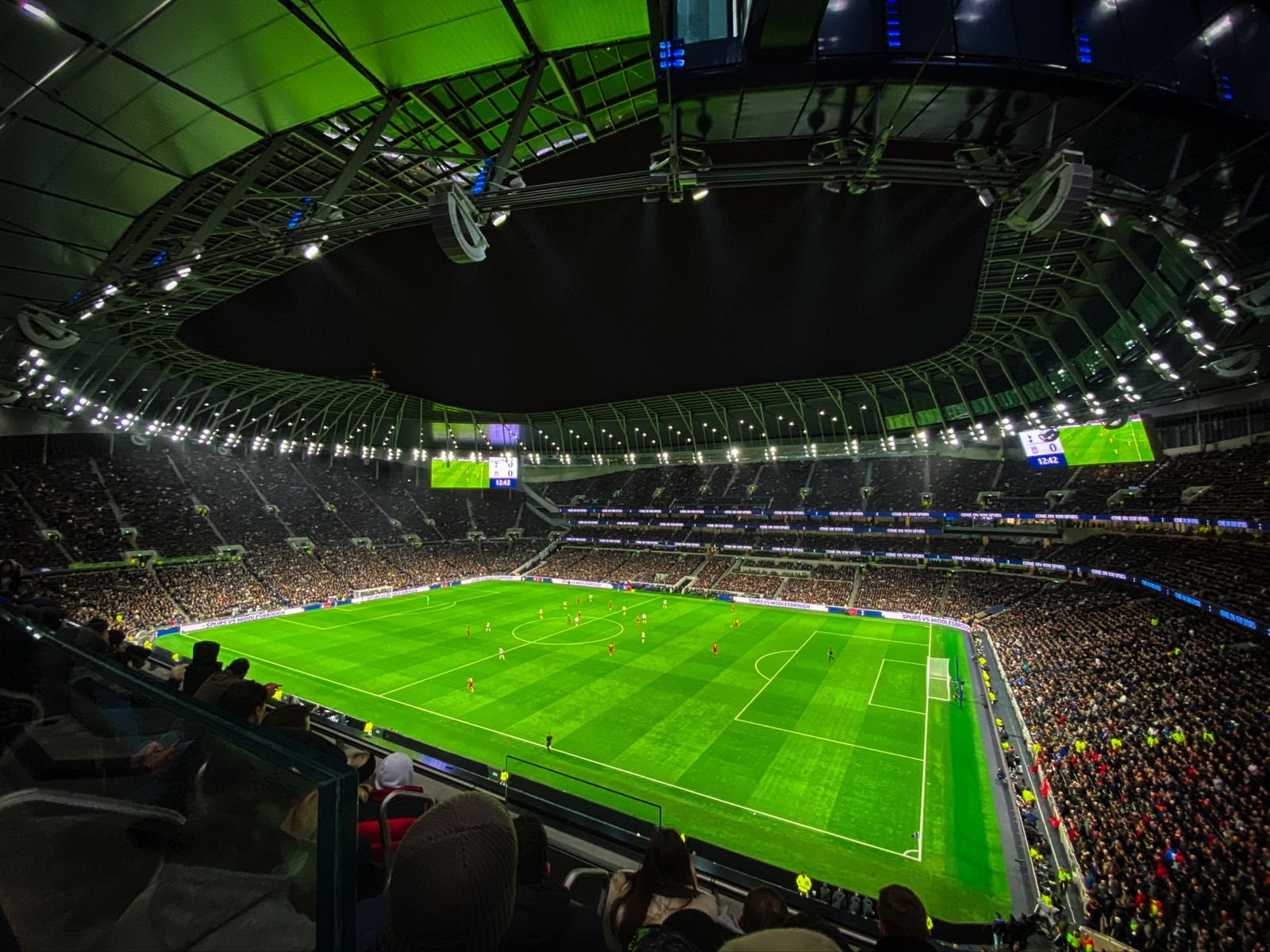
Gensler Architecture & Design Canada designed the BMO Field expansion under a services contract worth roughly $4.2 million, approved by city council in July 2023. The headline move: more than 17,000 temporary seats, lifting the stadium to an official tournament capacity of 45,736, per the host city. Upgrade costs run to $146 million, the Globe and Mail reports.
Temporary seating at this scale is its own architectural discipline. It typically means modular steel grandstands engineered to permanent-stadium loading standards, with every sightline, stair, and exit route calculated as carefully as the bowl it bolts onto. The structure had to pass the same crowd-safety math as concrete, then come apart cleanly once the tournament ended.
There’s a longer arc here worth sitting with. BMO Field opened as a $63 million build; cumulative renovations have now pushed past $300 million, according to the Globe. That’s a very Toronto pattern, building modestly and then upgrading in waves, and it’s a useful case study in how the city actually grows. We cover more of that thinking in our architecture section.
One quiet footnote: no major architecture press, not Dezeen, not the trade journals, has covered this expansion in depth. For the first men’s World Cup match ever played on Canadian soil, the building deserves a closer look.
Is the Fan Festival secretly a public art project?
Largely, yes. The FIFA Fan Festival at Fort York National Historic Site and The Bentway ran from 11 June to 19 July with 46 live match broadcasts, and The Bentway commissioned a full roster of installations for it. Four artists and studios, two cities, and one piece that will outlast the tournament entirely.
The commissions, per The Bentway: “Make the World Go Round,” a mural by Toronto artist Caitlin Taguibao; “United in Light,” an interactive LED flag installation by Montreal’s LeMonde Studio; “Fans Can Dance,” an interactive container studio by Daily tous les jours, the Montreal practice known for playful public interventions; and “Shore Lines” and “Net Scape,” modular seating by Toronto’s RAW Work. That’s a credible cross-section of Canadian public-art talent, not festival set dressing.
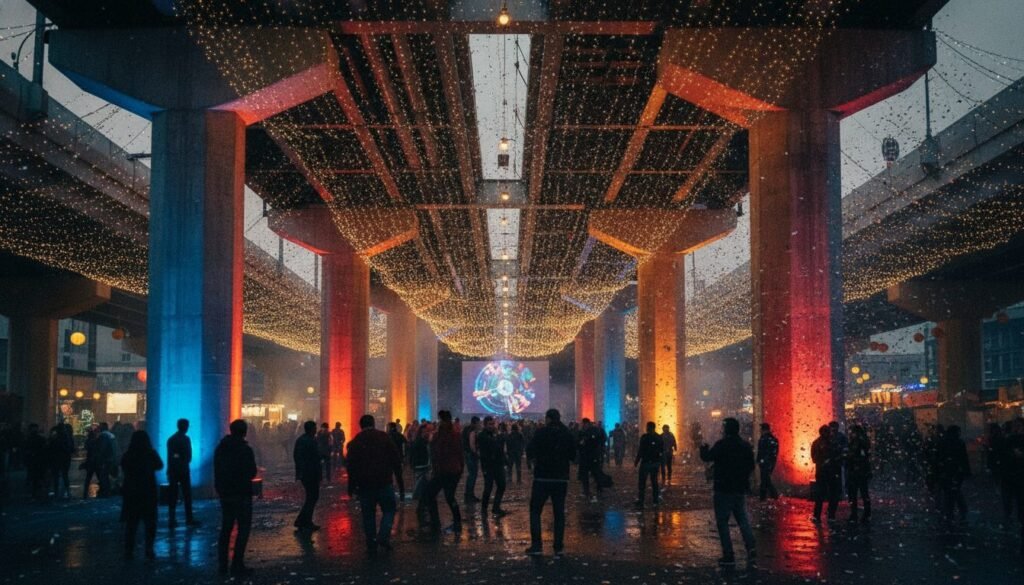
The piece to pay closest attention to is the Under Gardiner Lighting Project by Light Bureau, the Norwegian lighting design practice. It washes the Gardiner’s underside in a cool-to-warm gradient at Dan Leckie Way and Lake Shore, and at Bathurst. Unlike the grandstands and the broadcast screens, this one is permanent. Long after the final whistle, the lighting stays as a piece of public-realm legacy, exactly the kind of infrastructure-as-design move The Bentway was built to champion.
What does the World Cup actually cost Toronto?
The City of Toronto’s total cost was roughly $380 million, CP24 reported in June 2026. About $200 million is covered by federal and provincial grants, leaving the city’s $180 million share to be funded through the hotel tax and sponsorships rather than property taxes.
Zoom out and the number grows. The Parliamentary Budget Officer estimates total government costs across both Canadian host cities, Toronto and Vancouver, could exceed $1 billion. Whether that’s a sound investment depends on what you count: tourism receipts, global broadcast exposure, and the harder-to-price value of things like permanent lighting under the Gardiner.
We’d frame it this way: mega-events are one of the few forces that compress a decade of public-realm spending into three years. The design question isn’t whether $380 million is a lot (it is), but how much of it leaves behind things the city keeps.
What is still there
The lighting is the piece that outlived the tournament. Walk The Bentway under the Gardiner at dusk, at Dan Leckie Way and Lake Shore and again at Bathurst, when Light Bureau’s cool-to-warm gradient does its best work against the concrete. It was commissioned for the Fan Festival and it stayed.
Gensler’s temporary bowl is the part that did not stay. More than 17,000 seats went up for six matches and came back down again, which is worth remembering the next time a stadium expansion is described as permanent infrastructure.
Give yourself the walk between Fort York and Exhibition Place either way. The tournament turned that stretch of the waterfront into a connected design corridor, and it is best read on foot. For what is on around the city now, see our Toronto design events guide.
World Cup Toronto: quick answers
How many World Cup games did Toronto host?
Six. Toronto Stadium (BMO Field) at Exhibition Place hosted five group-stage matches on 12, 17, 20, 23 and 26 June 2026, plus a Round of 32 match on 2 July, per the official host-city schedule.
When was Canada’s first match?
Friday 12 June 2026 at 3 p.m. ET, against Bosnia and Herzegovina at Toronto Stadium. It was the first men’s World Cup match ever played on Canadian soil.
Where was the Toronto Fan Festival?
At Fort York National Historic Site and The Bentway, from 11 June to 19 July 2026. Entry was free, with 46 live match broadcasts plus commissioned public art by Caitlin Taguibao, LeMonde Studio, Daily tous les jours and RAW Work. The Under Gardiner lighting by Light Bureau is permanent and still in place.
How big was BMO Field for the World Cup?
The official tournament capacity was 45,736, achieved by adding more than 17,000 temporary seats in an expansion designed by Gensler Architecture & Design Canada. The upgrades cost $146 million, and the temporary seating came out after the tournament.