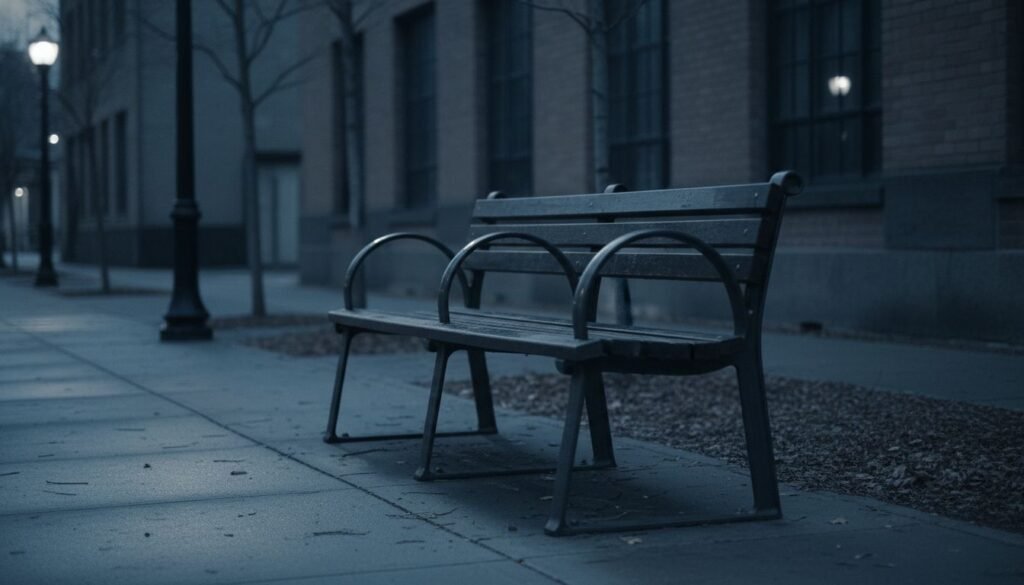
Hostile architecture, also called defensive or exclusionary design, is street furniture and public space built to restrict how people use it. Toronto has many documented examples, from benches with central armrest dividers to a transit shelter the City removed entirely in late 2023.
What is hostile architecture?
Hostile architecture is the deliberate design of public space and street furniture to restrict certain behaviours, such as sleeping, loitering, or skateboarding. Cara Chellew’s #defensiveTO project documents these forms across the city, and according to her research the practice is widespread in Toronto’s streets and plazas (defensiveTO).
The forms are easy to spot once you know them. Benches get central armrest dividers, so no one can lie down. Some seats are sloped or curved, comfortable for a minute and impossible for an hour. Ledges sprout metal studs. Smooth surfaces get skate-stoppers. Shelter simply disappears.
Who does it affect? Unhoused people most of all, since the design often targets sleeping and resting. But the same divided bench also turns away an elderly person who needs to lie down, a disabled person who cannot perch on a sloped seat, and a tired child. Design that excludes one group rarely stops there.
The label matters, too. Some call it defensive design, others exclusionary design, and critics use blunter terms. The shared thread is intent: the object is shaped to say no.
Critics have described hostile design as a form of “visual violence,” arguing it makes exclusion a permanent feature of the street (Spacing, 2019).
Where you’ll see it in Toronto
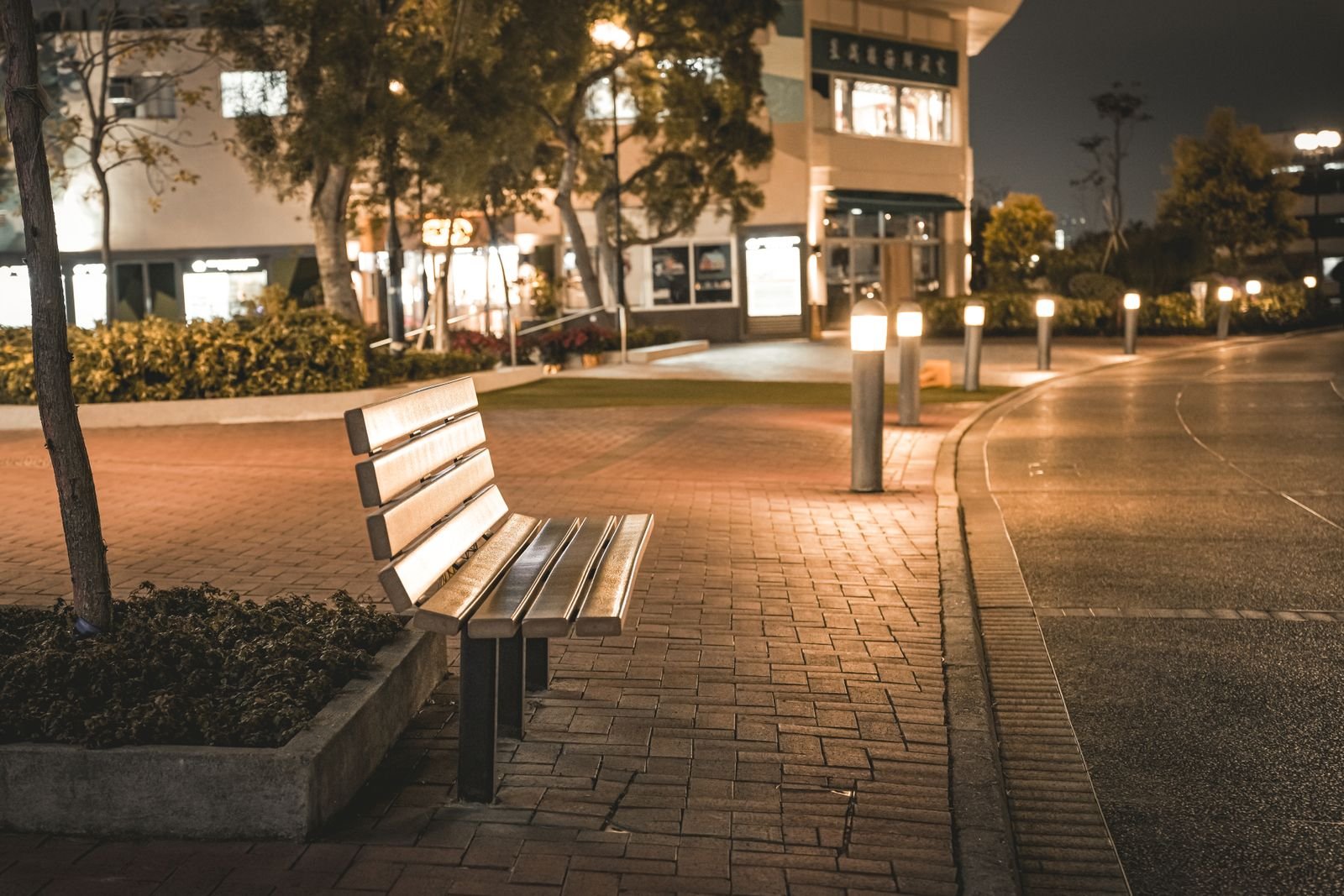
You will find hostile architecture across Toronto’s public realm, and once you start looking it is hard to unsee. According to reporting by Spacing and CBC, documented local forms include benches with central armrest dividers, curved steel seats, slanted benches, and studded ledges (Spacing, 2019; CBC, 2019).
The bench is the classic case. Some Toronto seats use a curved “c-shape” with a steel-tooth surface, others tilt at an angle, and many add a hard divider in the middle. Each choice does the same quiet work: it allows sitting and forbids lying down. Ledge studs follow the same logic, breaking up any flat surface long enough to rest on.
One example drew sustained criticism. A bar structure installed outside Toronto General Hospital was later removed after public pushback, a reminder that these interventions are reversible once people notice them and object.
For the bigger picture of how the city builds, see our guide to Toronto architecture, and for the concrete civic landmarks of an earlier era, our piece on Brutalist architecture.
How did #defensiveTO map it across the city?
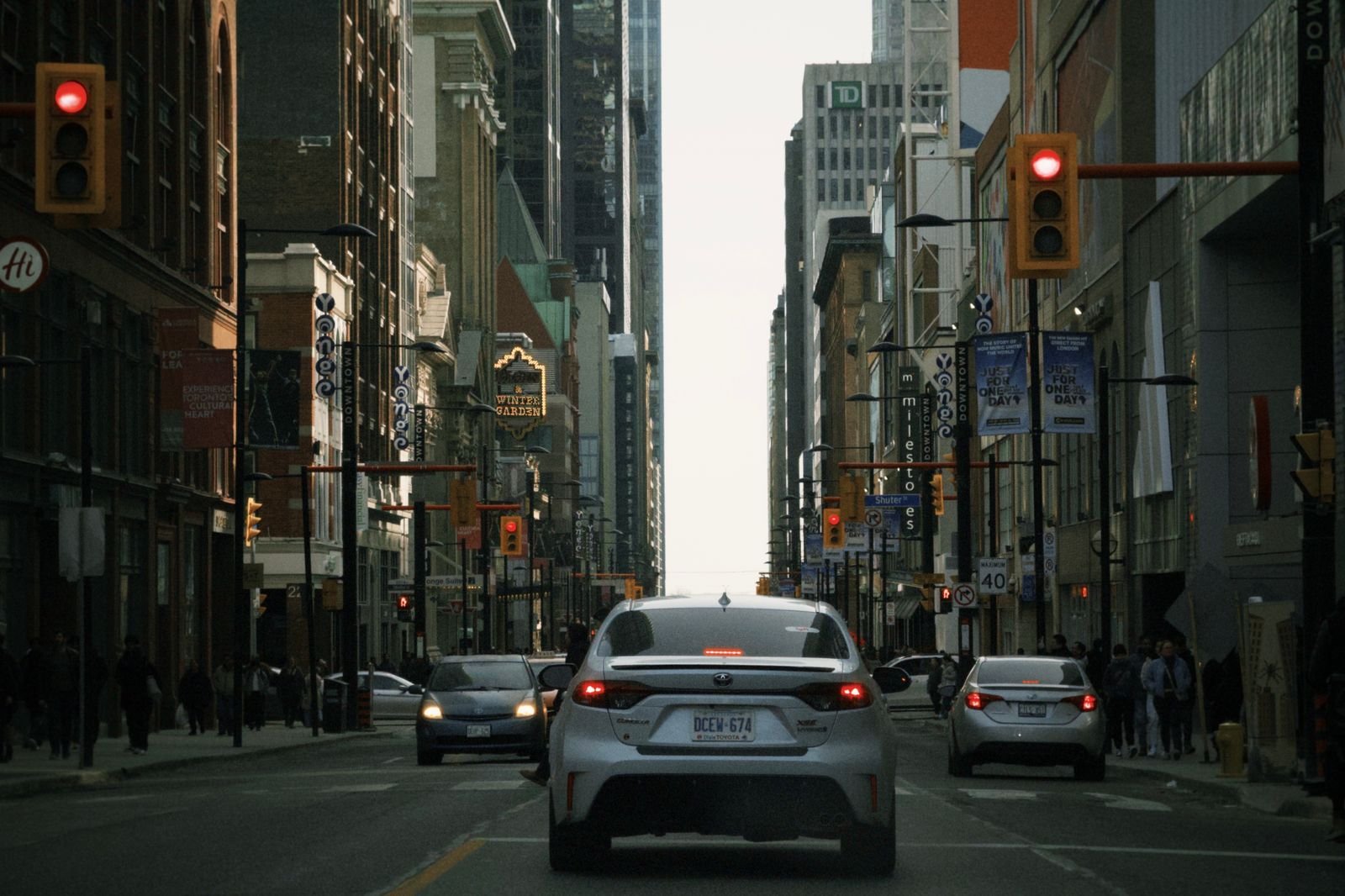
The clearest record of Toronto’s defensive design comes from #defensiveTO, a volunteer crowd-mapping project led by researcher Cara Chellew. According to the project, contributors documented more than 100 instances of hostile design across the city within roughly a week, including examples in privately owned public spaces (defensiveTO).
The speed of that count is the point. When a small group of volunteers can map 100-plus examples in days, the design is not an accident or a one-off. It is a pattern woven through the everyday city, in transit areas, plazas, and storefronts alike.
Privately owned public spaces, or POPS, complicate the picture further. These are plazas and courtyards that look public but sit on private land, often secured through development deals. Because a private owner manages them, defensive features can appear with little public scrutiny, even though the public is invited to use the space.
Chellew’s work gave the issue a shared vocabulary and a map. It moved the conversation from anecdote to evidence, which is partly why local journalists, advocates, and academics keep returning to it.
The debate: safety design or anti-homeless design?
The debate over hostile architecture in Toronto runs along a clear fault line. Critics argue it is anti-homeless by design and treats the symptoms of poverty rather than its causes, while authorities often defend specific changes on safety grounds, citing crime-prevention-through-environmental-design, or CPTED principles.
The critics’ case is straightforward. Removing a place to sit does not remove the need to sit. Coverage from The Varsity and advocacy from groups like Blankets for T.O. argues that defensive design pushes vulnerable people along without addressing the housing and income shortfalls underneath (The Varsity, 2024). The Poverty Unpacked podcast made a similar argument in late 2024 (Poverty Unpacked, Episode 40, 2024).
The institutional case rests on safety and risk. In December 2023, the City of Toronto removed a TTC shelter at Dundas Street East and Sherbourne in Moss Park following a Toronto Police CPTED audit. Reporting by Spacing framed this as a case study in how a single piece of transit infrastructure can disappear (Spacing, 2024).
Not everyone accepted the safety rationale. The transit-advocacy group TTCriders criticized the removal, arguing that taking away a shelter strips riders of basic protection from weather while doing nothing to solve the underlying problem (Spacing, 2024).
What makes this hard is that both concerns can be real at once. A space can carry genuine safety issues, and the response can still fall hardest on the people with the fewest options. The honest reading is that defensive design is a downstream choice, made where housing, shelter, and income supports have already fallen short.
Frequently asked questions
What is hostile architecture?
Hostile architecture is the deliberate design of public space and street furniture to restrict behaviours such as sleeping, sitting for long periods, or loitering. Common forms include benches with armrest dividers, sloped or curved seats, anti-loitering studs, and slanted ledges, as documented by the #defensiveTO project (defensiveTO).
Is hostile architecture legal in Toronto?
Yes. Hostile architecture is generally legal because it involves design choices about public furniture and space rather than prohibited conduct. The debate is about ethics and policy, not legality. The City removed a TTC shelter at Dundas Street East and Sherbourne in December 2023 after a police CPTED audit (Spacing, 2024).
What are examples of hostile architecture in Toronto?
Documented Toronto examples include benches with central armrest dividers, curved steel-tooth seats, slanted benches, and studded ledges, according to Spacing and CBC reporting (Spacing, 2019; CBC, 2019). A bar structure outside Toronto General Hospital was installed and later removed after public criticism.
Why do cities use hostile architecture?
Cities and property owners often cite safety and crime-prevention-through-environmental-design (CPTED) to justify defensive features. Critics counter that the approach targets unhoused people and treats symptoms rather than the housing and income shortfalls beneath them, a tension visible in the 2023 Moss Park shelter removal (Spacing, 2024).