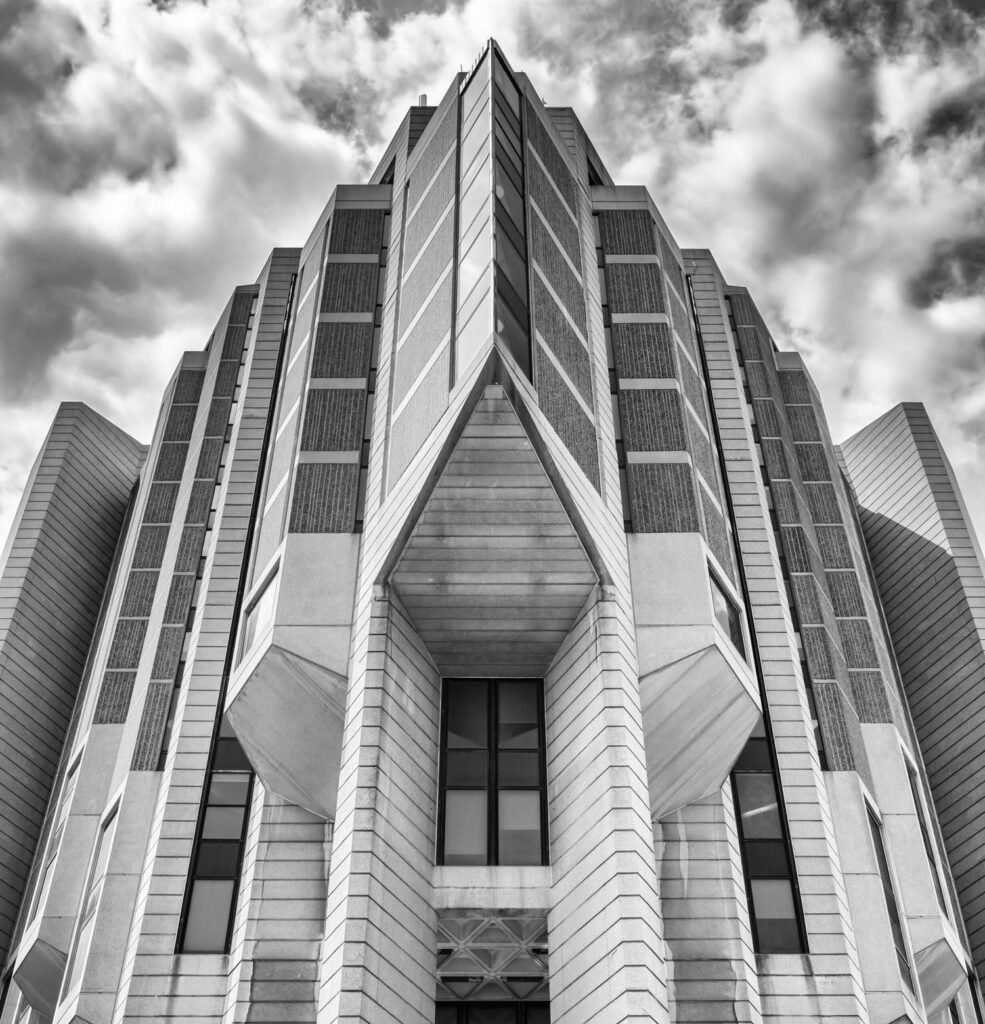
Brutalist architecture in Toronto is the wave of raw-concrete buildings the city put up during its 1960s and 1970s institutional building boom. Universities, libraries, and museums went up in bold geometric concrete. The result is one of North America’s richest concentrations of the style, much of it still standing and still arguing with us.
If you want the wider story, start with our guide to Toronto architecture. This piece zooms in on the concrete era. Below, seven buildings worth knowing, the people who designed them, and one detail each that explains why they still matter.
What is brutalist architecture?
Brutalist architecture is a postwar style built around raw concrete, monumental geometry, and structure left honestly on show. The name comes from the French “béton brut,” meaning raw concrete, not from the word “brutal.” It flourished roughly from the 1950s through the 1970s, favoured by institutions wanting buildings that read as serious and permanent.
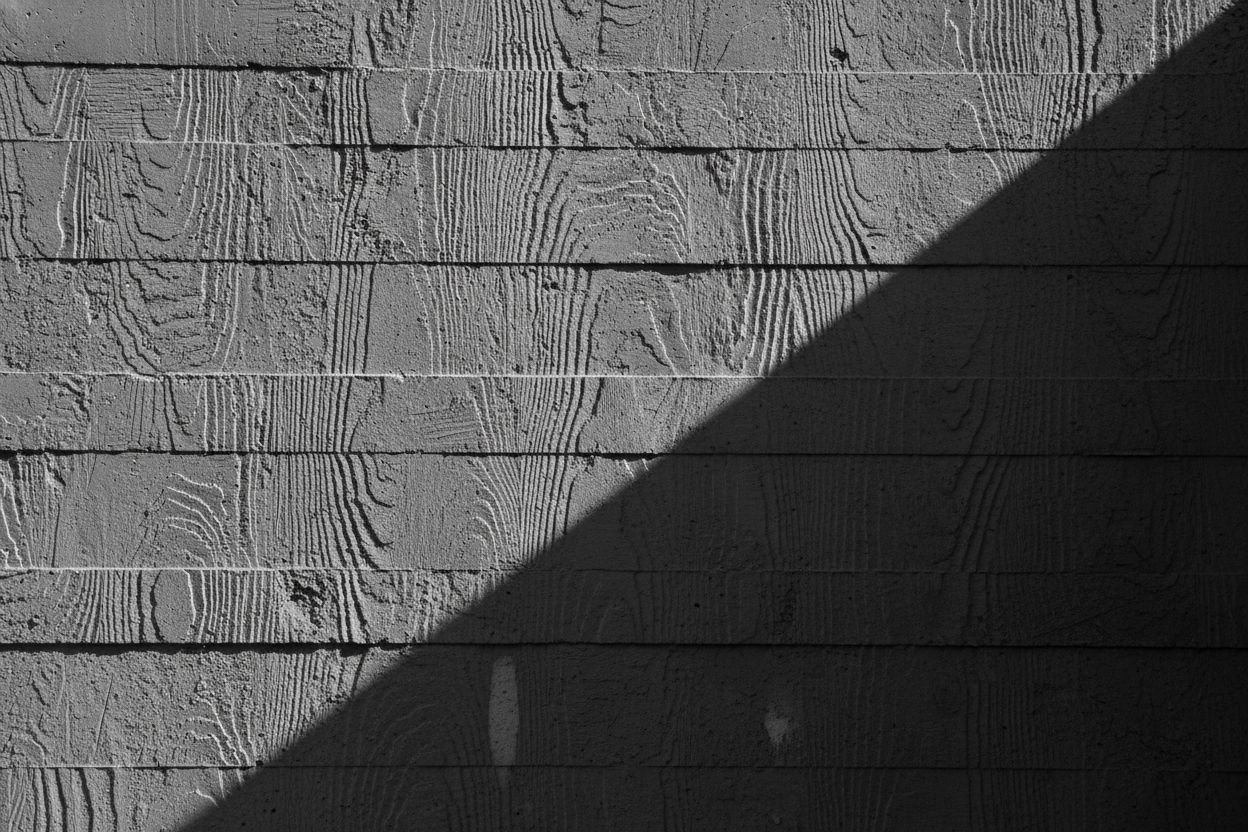
The style trades polish for mass. Walls are often board-formed or bush-hammered, so the concrete carries the texture of its making. Forms stack, cantilever, and step in ways that show how the building holds itself up.
Not everyone embraced the label. When John Andrews designed Scarborough College, he rejected the brutalist tag and called it “a very human building.” That tension, cold material versus humane intent, runs through almost every entry on this list.
The brutalist landmarks to know in Toronto
Six true brutalist landmarks define the era here, plus one modernist neighbour worth a clear comparison. Most went up within a 14-year window, from Scarborough College in the mid-1960s to the Toronto Reference Library in 1977. Together they cover libraries, a science museum, a student experiment, and two university teaching buildings.
1. Robarts Library
Location: 130 St. George Street, University of Toronto. Architect: Warner Burns Toan & Lunde with Mathers and Haldenby. Year: 1973.
Robarts is Toronto’s most famous brutalist building, and the one most people picture when they hear the word. It is a triangular-footprint concrete megastructure, all sharp angles and looming mass. The triangle theme repeats relentlessly inside, from the floor plan down to the window bays, which is exactly why students gave it a nickname.
2. Andrews Building, University of Toronto Scarborough
Location: 1265 Military Trail (Scarborough College). Architect: John Andrews with Page & Steele. Year: 1964 to 1966.
This is the building Andrews refused to call brutalist. It is a concrete megastructure that steps down the slope of the Highland Creek ravine, so the architecture and the landscape descend together. It landed on the cover of TIME in January 1967, and its stark concrete corridors have since drawn filmmakers looking for a dystopian backdrop.
3. Ontario Science Centre
Location: 770 Don Mills Road. Architect: Raymond Moriyama. Year: opened 1969.
Moriyama set three concrete pavilions across the Don ravine and linked them with bridges, so a visit is also a walk through a valley. The concrete is bush-hammered, giving the surfaces a rough, hand-worked grain. The building’s future was debated in 2024, with Moriyama Teshima among those campaigning to save it.
4. Toronto Reference Library
Location: 789 Yonge Street, Yorkville. Architect: Raymond Moriyama. Year: 1977.
Moriyama’s second entry here is the gentlest building on the list. The brutalist-modernist exterior gives way to a soaring terraced atrium, with balconies stepping up around a sky-lit void. Daylight floods the interior, which proves concrete buildings do not have to feel grim. It is the humane counterpoint to Robarts, a few blocks south.
5. Rochdale College (now Senator David A. Croll Apartments)
Location: 341 Bloor Street West. Architect: Tampold & Wells. Year: 1968.
This concrete tower was built for one of the city’s wildest experiments: a radical student-run co-op and free university that ran from 1968 to 1975. The building outlived the experiment by decades. Today it is a seniors’ residence, which is a quiet second act for a tower that once stood for student counterculture.
6. OISE Building
Location: 252 Bloor Street West, University of Toronto. Architect: Kenneth R. Cooper. Year: 1970.
The Ontario Institute for Studies in Education building is the most graphic on the list. Its façade is a tight geometric grid of angled, concrete-cased windows that catch light differently as you walk past. The building was restored around 2021, a sign that the city is starting to care for its concrete heritage rather than just enduring it.
7. Massey College (modernist contrast, not pure brutalist)
Location: 4 Devonshire Place. Architect: Ron Thom. Year: 1963. Note: this is a modernist building, not pure brutalism.
Massey College is here as a deliberate contrast. Ron Thom built a brick-and-concrete quadrangle that is warm and intimate where brutalism is cool and monumental. It won the RAIC Prix du XXe siècle for its lasting significance. Stand here, then walk to Robarts, and you feel the gap between modernist warmth and brutalist mass.
When were Toronto’s brutalist landmarks built?
Toronto’s concrete landmarks went up in a tight cluster, the earliest in 1963 and the latest in 1977, a span of just 14 years. That timeline maps cleanly onto the postwar institutional boom, when public money flowed into universities, science museums, and libraries. The chart below plots completion years for the buildings in this guide.
What about the CN Tower?
The CN Tower belongs to the same concrete era, but it is not a brutalist building. It opened in 1976 at 290 Bremner Boulevard, rose to 553.3 metres, and held the title of world’s tallest free-standing structure from 1976 to 2007. It is an engineering-led project, designed by a team that included John Andrews, with the structural work driven by its engineers rather than a single signature architect.
So if you came looking for it on a brutalism list, that is the honest answer. It is concrete, and it is of the period, but its DNA is engineering and broadcasting, not the institutional brutalism of Robarts or Scarborough College.
Frequently asked questions
What is the most famous brutalist building in Toronto?
Robarts Library at the University of Toronto, completed in 1973, is the city’s most famous brutalist building. Designed by Warner Burns Toan & Lunde with Mathers and Haldenby, its triangular-footprint concrete form has become shorthand for Toronto brutalism, equally admired and disliked depending on whom you ask.
Why is Robarts Library called Fort Book?
Students nicknamed Robarts “Fort Book” because its raw concrete mass and angular, fortress-like form look more like a stronghold than a study space. The triangular geometry repeats throughout the building, and the heavy, defensive appearance reinforces the impression of a citadel built to guard the university’s books.
Is brutalism making a comeback?
Appreciation for brutalism has clearly grown. Recent restorations, including the OISE Building around 2021, and public campaigns to save the Ontario Science Centre show a shift from demolition toward preservation. Whether new buildings revive the style is debatable, but the affection for existing concrete landmarks is real and rising.
Where can I see brutalist architecture in Toronto?
Start near the University of Toronto, where Robarts Library, the OISE Building, and the former Rochdale College sit within walking distance along the St. George and Bloor corridors. For more, ride out to the Andrews Building at U of T Scarborough or the Ontario Science Centre on Don Mills Road.
The bottom line
Toronto’s brutalist landmarks are not background. They are some of the boldest design decisions the city ever made, built fast and built to last during a confident institutional era. Walk from Robarts to Massey College and you read the whole argument: monumental concrete versus human-scaled warmth, in two blocks.
Love them or not, these buildings shaped how Toronto looks and learns. For the longer story of how the city built itself, see our guide to Toronto architecture. And for a sharper look at how concrete and street furniture can exclude people, read our piece on hostile architecture in the city.